
Hand numbness is common: waking with a dead arm, losing feeling in your fingers on the morning commute, or having your hand go numb halfway through a work call. The sensation has a simple mechanical explanation most of the time: a nerve is being compressed or irritated somewhere along its path from the neck, through the shoulder and elbow, down to the fingertips.
Hand numbness is one of the most common symptoms we see, and most cases are not dangerous. Some are. The useful skill is telling the difference, and the pattern of which fingers are affected is one of the strongest clues you have. This guide walks through the common causes, what the finger pattern suggests, the red flags that need a doctor the same day, and where chiropractic care fits.
The short version: numbness usually means a nerve is compressed at the neck, the elbow or the wrist. The thumb and index finger point to the median nerve, the little finger to the ulnar nerve. Sudden numbness on one side of the body with a drooping face, arm weakness or slurred speech is a stroke emergency: call 999 straight away.
What Numbness and Tingling Actually Mean
Numbness (loss of sensation), tingling or "pins and needles" (paraesthesia), and that heavy dead-arm feeling are all signals that a nerve is not conducting normally. Nerves are living tissue that need space and blood flow. Compress one, stretch it, or hold it in a shortened position long enough, and the signal it carries degrades.
This is why a hand that falls asleep under your body weight at night recovers within minutes, but a nerve compressed by a bulging disc or a thickened ligament can stay symptomatic for months. The mechanism is the same. The duration and the degree of pressure are what differ.
Numbness that comes and goes with position is usually mechanical. Numbness that is constant, progressive, or accompanied by weakness deserves a proper assessment rather than patience.
The Most Common Causes
Carpal tunnel syndrome. The median nerve is compressed at the wrist, where it passes under a tight band of ligament. Symptoms classically wake people at night and are eased by shaking the hand out. It is common in Malaysia: a 2020 study of 61 administrative staff at a Malaysian university found probable carpal tunnel syndrome in 16.5%, and a study of 100 frontline counter staff at a Klang Valley telecommunications company found 63% reported numbness, tingling or pain during a self-performed Phalen test. Both figures measure screening results rather than confirmed diagnoses, so read them as a sign of how widespread the complaint is, not as diagnosis rates.
A pinched nerve in the neck (cervical radiculopathy). A disc bulge, a stiff or arthritic joint, or narrowing around the nerve root can irritate the nerve where it exits the neck, and our neck pain page covers how we assess it. This usually brings neck or shoulder-blade pain along with the hand symptoms, and the whole arm may ache. Our guide to neck pain causes and how chiropractic helps covers the neck side of this in more detail.
Cubital tunnel syndrome. The ulnar nerve is compressed at the inside of the elbow, the spot people call the funny bone. Sleeping with elbows bent, or resting them on a desk edge for hours, makes it worse.
Sleeping and desk posture. Curled wrists, bent elbows and a head held forward for hours all narrow the space nerves travel through. This is the most common and most fixable driver, and it overlaps heavily with the postural patterns covered in how to fix hunched posture and chiropractic care for office workers.
A slipped disc. A herniated cervical disc can press directly on a nerve root and produce numbness that follows a specific band down the arm. See slipped disc treatment without surgery.
Diabetes and peripheral neuropathy. This matters in Malaysia, where diabetes is common. A 2024 cross-sectional study of 1,283 people recruited at Selangor retail pharmacies found peripheral neuropathy in 26.5% of participants on vibration testing at the big toe, rising to 46.1% in those over 50, with diabetes (adjusted odds ratio 3.9) and age over 50 (adjusted odds ratio 3.4) the strongest predictors. Neuropathy typically affects both sides, often starts in the feet, and is described as burning or numb "gloves and stockings" rather than following one nerve.
Thoracic outlet syndrome. The nerves and blood vessels heading into the arm pass through a narrow space between the collarbone, the first rib and the scalene muscles. Carrying heavy bags on one shoulder, a long history of rounded shoulders, or working with the arms overhead can narrow it further. Symptoms often cover the whole arm rather than a single finger pattern, and typically worsen when the arm is raised or held up for long.
Circulation rather than nerves. Hands that go pale, blue or cold before they go numb point to blood flow rather than nerve compression. Raynaud phenomenon does this in response to cold or stress. Numbness with cramping in the forearm during repeated use, or a cold hand with a weak pulse, needs a medical assessment rather than manual care.
Thyroid problems, pregnancy, and vitamin B12 deficiency can all contribute, which is why blood tests are sometimes the right next step rather than more hands-on treatment.
Which Fingers Are Numb? What the Pattern Suggests
Different nerves supply different parts of the hand, so the map of your symptoms narrows the list quickly.
- Thumb, index, middle and half the ring finger: the median nerve, most often carpal tunnel syndrome at the wrist. A C6 nerve root problem in the neck can produce a similar thumb and index pattern.
- Little finger and the other half of the ring finger: the ulnar nerve, usually compressed at the elbow. A C8 nerve root in the neck can look similar.
- Back of the hand and thumb web space: the radial nerve, often from sustained pressure on the upper arm. If you cannot lift the hand at the wrist (wrist drop), see a doctor promptly.
- A band running from the neck or shoulder blade down the arm: a nerve root in the neck rather than anything in the hand itself.
- Both hands, symmetrically, often with numb feet: more likely a systemic cause such as diabetic neuropathy, thyroid disease or B12 deficiency. Carpal tunnel syndrome is also commonly bilateral, so both hands alone does not rule out a trapped nerve.
Two details separate a wrist problem from a neck problem better than the finger map alone. Carpal tunnel symptoms characteristically wake you at night and improve when you shake the hand. Neck-driven symptoms usually come with neck or shoulder-blade pain and change when you move or position your head. The two can also coexist, and pressure on a nerve at the neck may make the same nerve more vulnerable further down.
Red Flags: When Numbness Needs Urgent Care
Call emergency services (999 in Malaysia, or 112 from a mobile phone) or go to the nearest emergency department if numbness arrives with any of the following. These point to a stroke or another emergency where minutes matter.
- Sudden numbness or weakness on one side of the body, especially the face, arm and leg together.
- Facial drooping, slurred speech, or difficulty understanding what people are saying.
- Sudden confusion, loss of vision, severe headache, or trouble walking and balancing.
- Numbness with chest pain, shortness of breath, sweating or nausea, which can signal a cardiac event.
- Loss of bladder or bowel control, or numbness in the groin and inner thighs, which is a spinal emergency.
The stroke acronym is worth memorising: FAST, for Face drooping, Arm weakness, Speech difficulty, Time to call for help.
Book a medical appointment promptly, rather than a manual therapy appointment, if you have:
- Weakness that is getting worse over days rather than weeks, dropping objects, or visible muscle wasting at the base of the thumb or between the fingers.
- Clumsy hands, trouble with buttons or handwriting, or an unsteady walk, which can point to pressure on the spinal cord in the neck.
- Numbness after significant trauma such as a fall or road accident.
- Numbness in both hands and both feet, particularly with diabetes or unexplained weight loss.
Screening for these is part of every first consultation at our clinic, and we refer to a medical doctor whenever they are present. The same principle applies as in our guide to back pain causes and when to see a chiropractor: serious causes are uncommon, but they come first.

What You Can Do Now
Fix the sleeping position first. If you wake with numb hands, keep your wrists straight and your elbows relatively unbent. Many people improve with a neutral wrist splint worn only at night. Sleeping on your stomach with your arms overhead is a common aggravating combination for both the neck and the arms. For suspected carpal tunnel syndrome, a night splint worn for about six weeks is a standard first step.
Change the desk set-up. Keep forearms supported and roughly level with the keyboard, wrists straight rather than bent up, and elbows off hard edges. Raise the screen so you are not dropping your chin toward your chest all day.
Break up long holds. Nerves tolerate movement far better than sustained positions. A short movement break every 30 to 45 minutes, including gentle neck rotations and opening the chest, is more useful than one long stretch at the end of the day.
Keep moving the arm. Gentle nerve-gliding movements, moving the arm and wrist through a comfortable range without forcing into symptoms, help maintain mobility. Aggressive stretching into pins and needles makes irritated nerves worse, not better.
Get your blood sugar checked if the numbness affects both hands or both feet, or if you have a family history of diabetes. That is a medical test, not something manual care can substitute for.
For broader mobility work that complements this, see our guide to stretching techniques for better flexibility.
Four Movements Worth Trying
These are gentle, low-risk movements for mechanical numbness without red flags. Stop if any of them sharply increases the tingling: nerves respond to gentle, repeated movement, not to being stretched hard.
- Median nerve glide: Hold your arm out to the side at shoulder height, palm up, elbow straight but not locked. Gently tilt your head away from that arm, then back to neutral, while keeping the wrist relaxed and extended. Move slowly in and out of the position 8 to 10 times. This flosses the nerve rather than stretching it.
- Ulnar nerve glide: Make an OK sign with thumb and index finger, turn the hand so the circle frames your eye like goggles, then bring the hand toward the side of your face and away again. Repeat 8 to 10 times, staying well short of pins and needles.
- Chin tuck (deep neck flexor activation): Sit tall and draw your chin straight back, as if making a double chin, without tilting the head. Hold 5 seconds, repeat 10 times. This unloads the lower neck, where nerve roots for the hand exit.
- Doorway pectoral stretch: Rest your forearms on a doorframe at about 90 degrees, then step through gently until you feel a stretch across the front of the chest. Hold 30 seconds, twice. This opens the space under the collarbone, which matters for thoracic outlet symptoms and rounded-shoulder posture.
Do these once or twice a day alongside the desk and sleeping changes above. If four weeks of consistent work changes nothing, the driver has probably not been identified yet.
How a Chiropractor Assesses Numb Hands
The purpose of the assessment is to find out where the nerve is actually being compressed, because the treatment differs completely depending on the answer.
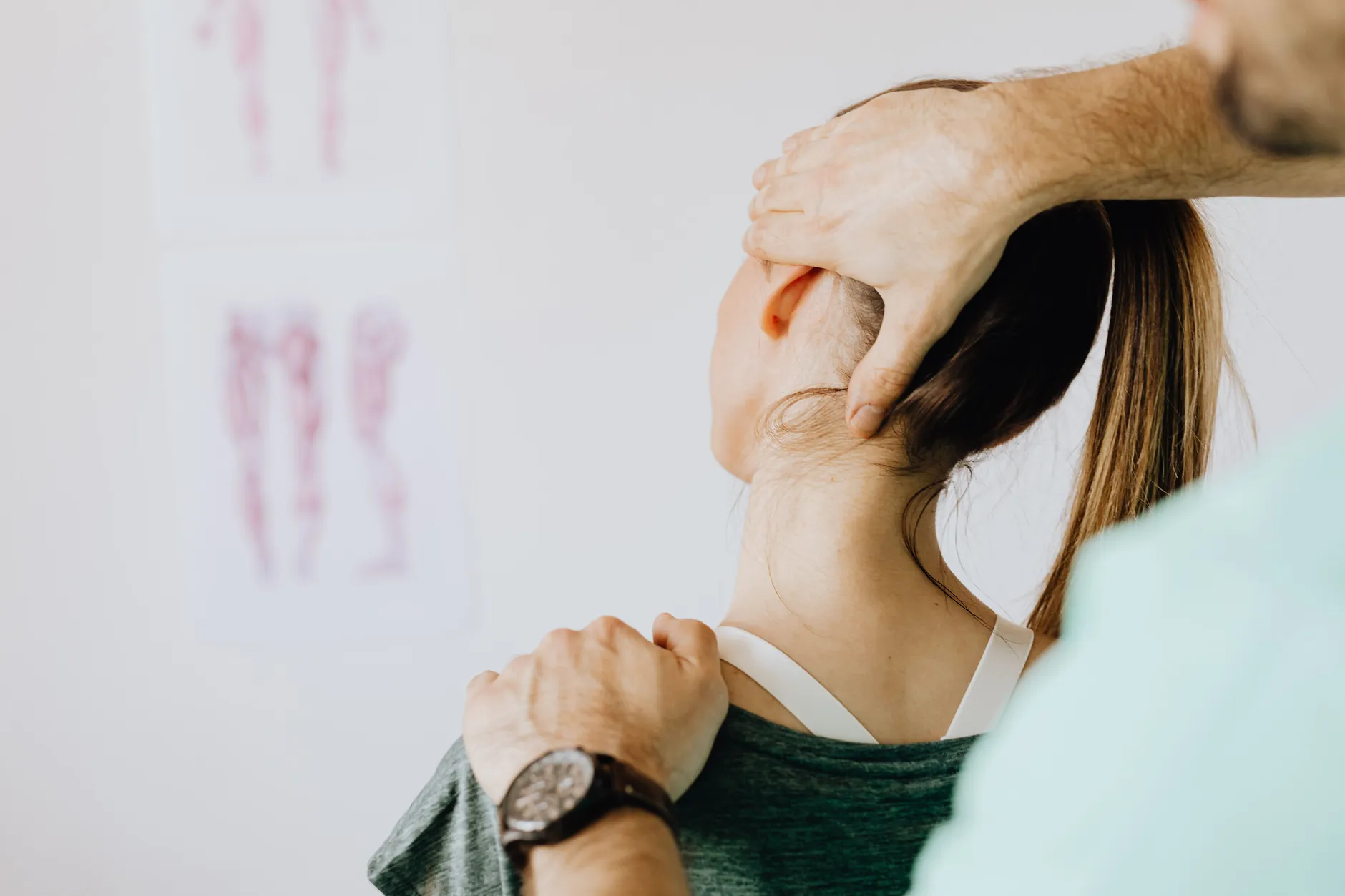
A thorough examination looks at neck range of motion and which movements reproduce or relieve your symptoms, muscle strength in the arm and grip, reflexes, sensation across each nerve territory, and specific tests at the neck, elbow and wrist. Where it will change the plan, spinal X-rays (usually of the neck) show the structure of the cervical spine and the spaces the nerve roots pass through.
At Kind Chiropractic that examination follows the Gonstead System, which is built around identifying the specific segment involved rather than treating the neck in general terms. Our article on understanding the Gonstead chiropractic method explains the approach, and the spinal alignment care page covers what care looks like in practice.
The evidence base here is limited. Manual therapy combined with exercise is a commonly used option for cervical radiculopathy, although a 2016 review in Chiropractic and Manual Therapies rated the supporting evidence as low-level, and a 2024 randomised controlled trial of 48 people with carpal tunnel syndrome, published in the Journal of Bodywork and Movement Therapies, found that adding manual therapy directed at the neck produced greater improvement in pain, function and nerve conduction measures than conventional physiotherapy alone. That is an encouraging finding about the neck and wrist connection, from one small trial. The techniques tested were general cervical manual therapy rather than Gonstead adjusting, so read it as support for the principle, not proof of a specific method.
Tell us straight away about any sudden severe headache, dizziness or change in vision, before or during care. If your presentation is not mechanical, or if it points to neuropathy or a systemic cause, the honest answer is a referral rather than a treatment plan. If you want the balanced view on risks and safety first, read is chiropractic safe?
How Long Recovery Takes
Numbness driven by posture and sleeping position often improves within two to four weeks once the aggravating position changes. Symptoms from a nerve root in the neck usually take longer, commonly six to twelve weeks, and some cases take several months. Recovery often follows an order: pain settles first, then the tingling, then the numbness, with strength returning last. Numbness can linger for a while after the pain has gone.
One useful rule: symptoms that have been present for a few weeks generally respond faster than symptoms left for a year. Nerves recover slowly, and long-standing compression takes longer to reverse. If nothing has changed after four to six weeks of appropriate care, that is a signal to reassess rather than continue.
Frequently Asked Questions
Why do my hands go numb at night? Sleeping with bent wrists or elbows compresses the median or ulnar nerve for hours. Night symptoms that wake you and ease when you shake your hand are the classic pattern of carpal tunnel syndrome.
Is numbness in one hand more serious than in both? One hand usually points to a trapped nerve at the neck, elbow or wrist, unless it starts suddenly with face or limb weakness, which is an emergency. Both hands can still be carpal tunnel syndrome or a neck problem, but both hands together with numb feet, clumsy hands or an unsteady walk needs a medical assessment.
Can neck problems really cause numb fingers? Yes. Nerves supplying the hand exit the spine in the neck, so irritation at the nerve root can produce numbness in the fingers with no wrist problem at all.
Can a chiropractor help with carpal tunnel syndrome? Chiropractic care can address contributing factors at the neck, shoulder and elbow, and one small 2024 trial found neck-directed manual therapy improved carpal tunnel outcomes alongside standard physiotherapy. Severe cases with muscle wasting need a surgical opinion.
Should I worry if my arm falls asleep occasionally? An occasional dead arm that clears within minutes of moving or changing position is usually harmless. Numbness that is constant, worsening, or comes with weakness is not. Numbness alongside face drooping, slurred speech or one-sided weakness needs emergency care even if it passes within minutes, because a brief stroke warning (TIA) can resolve on its own.
If numbness or tingling in your hands is becoming a daily event, book an appointment at Kind Chiropractic in Bangsar. We will work out where the nerve is being compressed and tell you honestly whether chiropractic care is the right answer for it. Consultation fees are listed on our pricing page.
This article is general information and does not replace medical advice about your own symptoms.
Sources
- Prevalence and factors associated with peripheral neuropathy in a setting of retail pharmacies in Malaysia: a cross-sectional study. PLOS One (2024). doi:10.1371/journal.pone.0307093
- Che Hasan MK et al. Assessing carpal tunnel syndrome among administrative staff of a higher learning institution: a preliminary study. Belitung Nursing Journal (2020).
- Mohd Tamrin SB, Zakaria NS. The prevalence of carpal tunnel syndrome among counter workers in a telecommunication company. Malaysian Journal of Human Factors and Ergonomics (2016).
- Effectiveness of manual therapy to the cervical spine on clinical outcomes and electrodiagnostic tests in people with Zarrin et al. Effectiveness of manual therapy to the cervical spine in people with carpal tunnel syndrome: a randomized controlled trial. Journal of Bodywork and Movement Therapies (2024). doi:10.1016/j.jbmt.2024.04.020 (PMID 39593590)
- Thoomes EJ et al. Effectiveness of manual therapy for cervical radiculopathy: a review. Chiropractic and Manual Therapies (2016). doi:10.1186/s12998-016-0126-7
- American Stroke Association: stroke symptoms and the FAST and BE-FAST warning signs.
Struggling with neck pain or stiffness? Book a consultation today.
No referral needed. We confirm your appointment within 2 hours.