Is chiropractic safe? It is one of the most common questions we receive at Kind Chiropractic, and it deserves a real answer, not a reassuring brush-off. The honest answer is: yes, chiropractic care is safe for most people when a proper assessment is done first, when the right techniques are selected for each individual, and when any clinical red flags are identified and respected. That is a different statement from "chiropractic is risk-free." Like any physical healthcare, it carries a small profile of side effects and a very small profile of rare risks that any responsible practitioner will discuss with you upfront.
This page covers the actual safety evidence, the difference between expected mild effects and genuinely rare adverse events, the specific situations that require extra care or prior medical input, and how the clinical assessment process at a quality clinic reduces risk for each individual patient.
What the Evidence Shows About Chiropractic Safety
The research on chiropractic safety is reassuring overall. Systematic reviews consistently show that the most common effects following a chiropractic adjustment are mild and transient: local soreness in the treated area, mild fatigue, and occasionally a temporary increase in the symptom the patient came in for before it begins to settle. A 2007 review in Spine estimated that these mild adverse reactions occur in roughly 30 to 60 percent of patients after cervical manipulation and 10 to 20 percent after lumbar manipulation, but that they typically resolve within 24 to 48 hours. These are not adverse events in the clinical sense; they are expected physiological responses to mechanical treatment of tissues that have been under chronic load.
Serious adverse events following chiropractic care are rare. The most cited concern is vertebrobasilar stroke associated with cervical manipulation. The best current estimates place this risk at somewhere between 1 in 400,000 and 1 in 5.85 million cervical manipulations, depending on the population studied and how causation versus coincidence is assessed in the data. For context, the risk of a serious adverse event from non-steroidal anti-inflammatory drugs (NSAIDs, including common over-the-counter options) includes a gastrointestinal bleed rate of roughly 1 in 1,000 users per year. Neither statistic should be used to dismiss concern; both should be understood in proportion.
A careful review of the vertebrobasilar stroke data also highlights a confounding challenge: patients who are in the early stages of a vertebral artery dissection (a spontaneous arterial event, not caused by manipulation) often present with neck pain and headache that leads them to seek care from a chiropractor or GP in the days before the stroke occurs. Some of the strokes attributed to manipulation in older case reports may have been pre-existing arterial events that were already in progress. Well-designed prospective studies, including a large population-level study in Ontario, Canada, found no increased risk of vertebrobasilar stroke in chiropractic patients compared to those visiting their GP for the same neck-pain presentation. This does not eliminate the theoretical risk, but it does substantially change how that risk should be interpreted.
Common Mild Effects: What Is Normal After an Adjustment
Understanding the difference between an expected response and a warning sign reduces unnecessary anxiety and helps you communicate clearly with your practitioner.
Local soreness in the adjusted area is the most common response and typically feels similar to the muscle soreness that follows an effective workout. If a joint has been restricted for weeks or months, the soft tissues and periarticular structures around it will have adapted; when mobility is restored, those tissues respond. This soreness usually peaks within 24 hours and is largely gone by 48 hours. It is a sign that something happened, not a sign that something went wrong.
Temporary fatigue following care is also common. The nervous system processes a significant amount of mechanical input during a chiropractic session; some patients feel tired for a few hours afterward in a way that resembles the response to good physical work. Rest and hydration help. If fatigue persists beyond 24 to 36 hours or is accompanied by dizziness, nausea, or neurological symptoms, you should contact your practitioner.
A temporary flare of existing symptoms: this sometimes concerns patients, but it is a documented phenomenon in manual therapy and physiotherapy literature as well. When chronically compressed or sensitised tissues are mobilised, there can be a brief period where symptoms seem a little louder before they begin to settle. Your chiropractor should warn you about this possibility beforehand so it does not feel alarming when it happens.

The Neck Manipulation Discussion: Handled Honestly
Is chiropractic safe for the neck? This is the area that attracts the most concern, and it deserves a direct and calibrated response.
Cervical manipulation (adjustment of the neck vertebrae) is effective for mechanical neck pain, headache, and certain types of cervicogenic dizziness. It is also the technique most associated with the rare serious risk noted above: vertebrobasilar stroke from vertebral artery injury. As discussed, the absolute risk is very low, but it is not zero, and a responsible chiropractor will always discuss this with you before treating your neck.
The clinical response to this risk is not to avoid cervical care wholesale; it is to screen carefully. A thorough assessment before cervical manipulation includes neurological screening, history for vascular risk factors (including blood pressure, smoking, oral contraceptive use, migraine with aura, prior stroke or TIA, coagulation status), and specific pre-manipulation tests designed to assess vertebral artery function. At Kind Chiropractic, the Gonstead system of assessment, which includes X-ray analysis of cervical spinal alignment when there is a clinical reason, informs our cervical care decisions. The Gonstead approach is inherently specific: rather than applying manipulation to a broad region, it identifies the exact segment involved and selects the adjustment vector and technique accordingly. This specificity is itself a safety feature.
For cases where cervical manipulation is contraindicated or the patient prefers to avoid it, there are effective alternatives: cervical mobilisation (gentler, non-thrust movement), instrument-assisted techniques, soft tissue work, and therapeutic exercise. Effective cervical care does not require high-velocity manipulation, and at a quality clinic, you will never be pressured into a technique you are uncomfortable with.
If you would like to understand how we assess and care for neck conditions, our neck pain service page and the Gonstead chiropractic approach page explain both the assessment process and the range of techniques we use. For a deeper look at what actually drives neck pain, see our article on neck pain causes and how chiropractic helps.
Who Should Take Extra Care or Seek Medical Clearance First
Chiropractic care is not appropriate for everyone without modification. The following groups should discuss their situation in detail with their chiropractor and, in some cases, seek medical input before beginning care.
People with osteoporosis require significant technique adaptation. High-velocity manipulation applied to bones with reduced density carries a fracture risk that makes standard adjustment inappropriate. Gentle mobilisation, soft tissue work, and therapeutic exercise can still be beneficial, but the approach must be adapted to the bone integrity of the individual.
People taking anticoagulant medication (blood thinners such as warfarin, rivaroxaban, or apixaban) have an elevated risk of haematoma formation at sites of deep tissue pressure. Certain spinal techniques and deeper soft tissue work require modification. A full medication history at your first appointment allows your chiropractor to adjust accordingly.
People with a known or suspected arterial aneurysm, or a history of vascular events in the spine, should obtain medical clearance before any spinal manipulation, particularly cervical. These are rare presentations but important ones to flag.
Acute fracture, tumour, active infection at the spinal level, or cord compression with significant neurological deficit: these are absolute contraindications to spinal manipulation. They are conditions that require urgent medical or surgical management, and a chiropractor who identifies red flags for these during assessment should refer immediately rather than treat.
Inflammatory arthropathies such as rheumatoid arthritis, ankylosing spondylitis, and psoriatic arthritis: these can affect the cervical spine in ways that change the structural stability and risk profile. Care can often still be provided, but it requires knowing the disease status, recent imaging, and close coordination with the patient's rheumatologist.
People with recent spinal surgery should not receive manipulation to the operated segment without surgical clearance. Adjacent segments can often still be cared for, and soft tissue work and gentle mobilisation can support rehabilitation, but the operated site requires caution.
How Proper Screening and Assessment Make Care Safer
Safety in chiropractic is not a product of avoiding all intervention; it is a product of matching the right intervention to the right patient at the right time. This requires a thorough intake process.
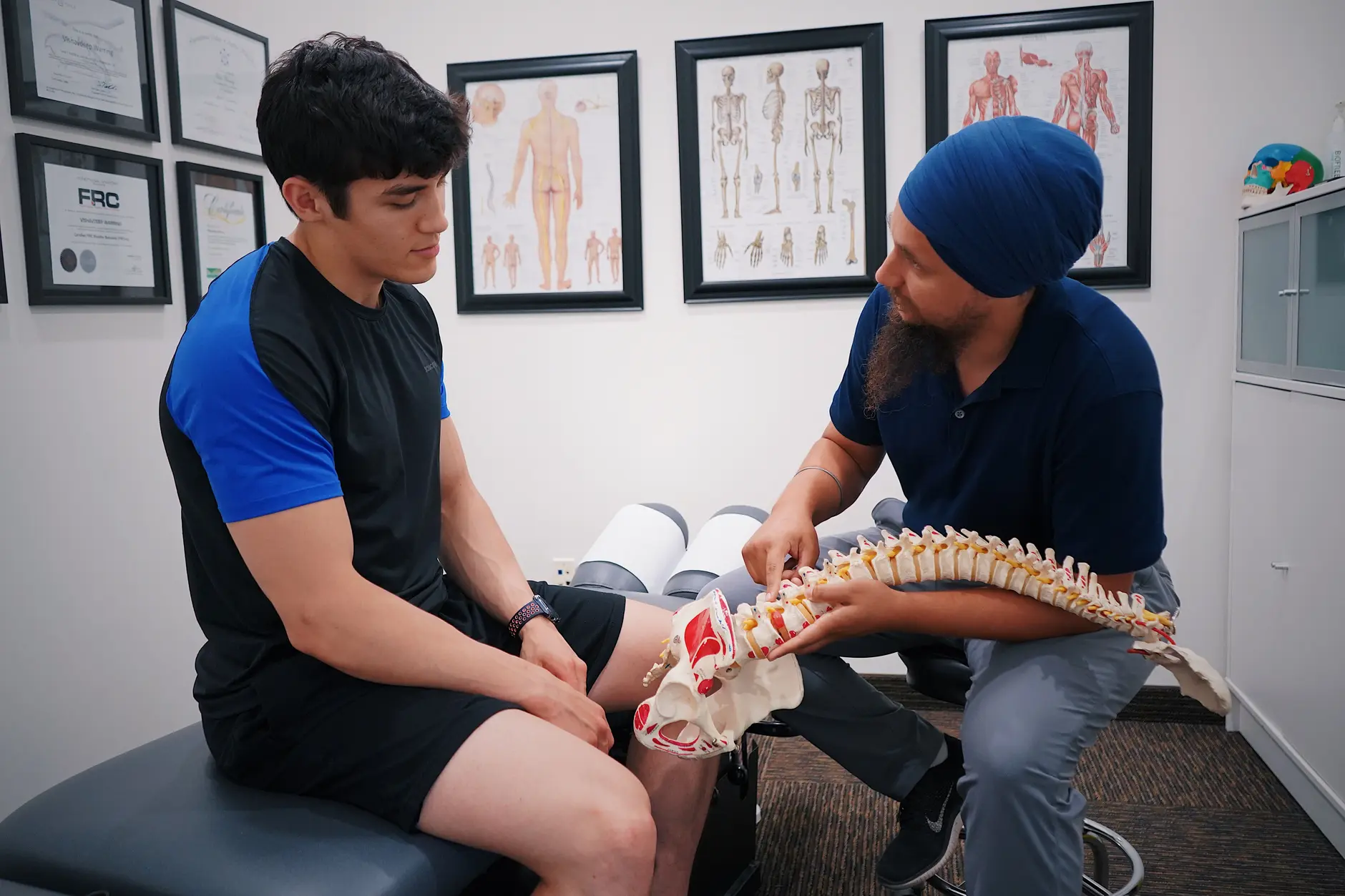
At Kind Chiropractic, every new patient undergoes a comprehensive history and physical examination before any treatment. The history covers the presenting complaint, duration, aggravating and relieving factors, neurological symptoms, medical history including prior surgeries and diagnoses, medication list, and family history where relevant. The physical examination includes neurological testing of reflexes, sensation, and motor function; orthopaedic tests for the affected region; and palpatory assessment of spinal mobility and soft tissue quality.
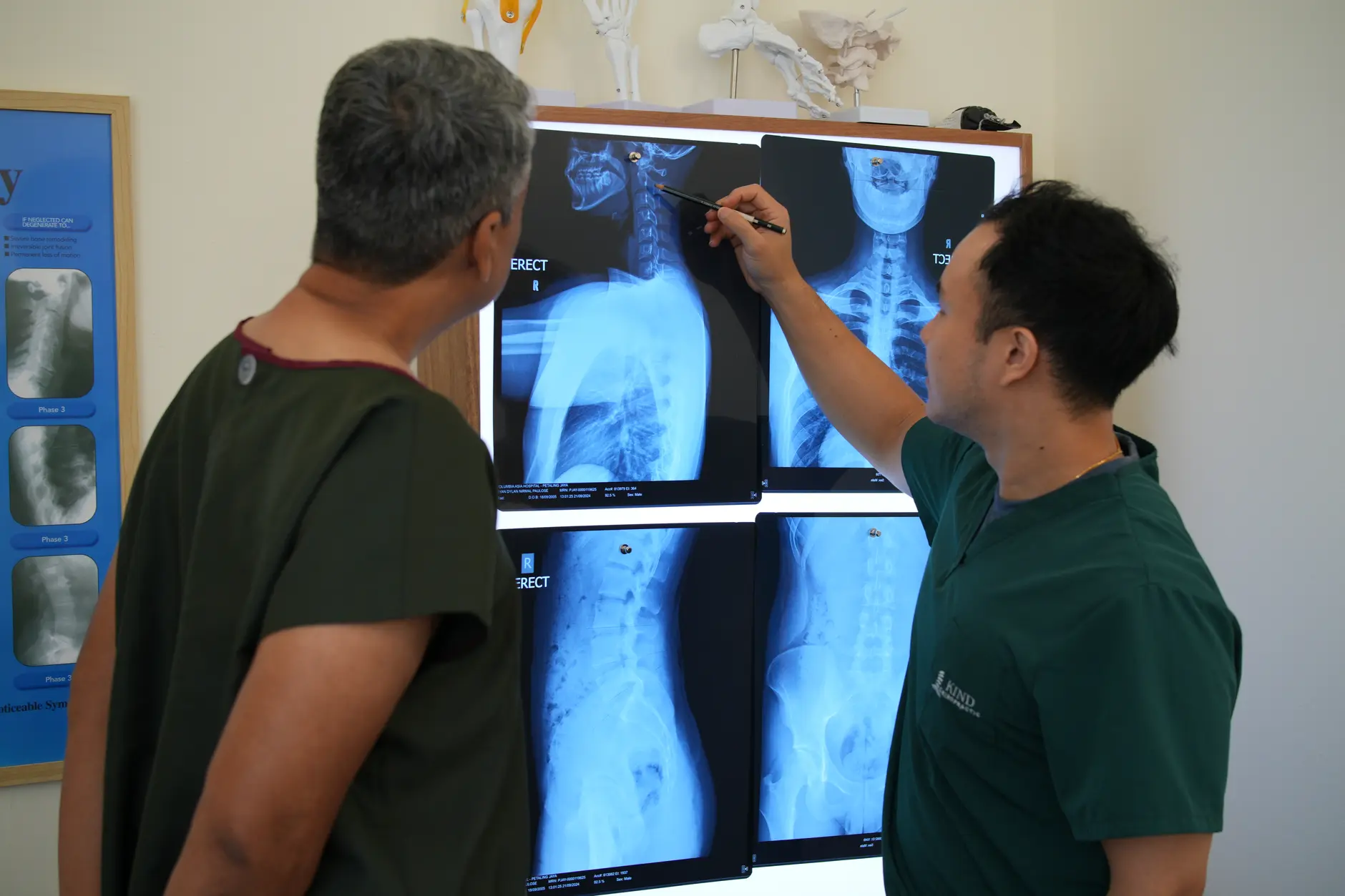
Where clinically indicated, spinal X-rays are taken as part of the Gonstead assessment process. X-ray imaging reveals structural changes, bone density concerns, disc space narrowing, fracture, and alignment issues that cannot be assessed by palpation alone. Seeing the patient's spine before touching it is a meaningful safety step, and it is why, when there is a clinical reason, we take X-rays in the clinic rather than relying on palpation alone.
The assessment findings determine the care plan: which techniques are used, how much force, at which segments, and with what frequency. This individualisation is the mechanism through which thorough assessment translates into safer care. A 65-year-old with osteopenia, hypertension, and cervical arthrosis receives a materially different approach from a 30-year-old athlete with a mechanical disc irritation, even if both present with neck pain. That is how it should be.
For a detailed look at how spinal assessment drives care decisions, see the spinal alignment care service page.
Is Chiropractic Safe During Pregnancy?
Pregnancy-related musculoskeletal complaints are extremely common, and chiropractic care can be beneficial throughout pregnancy when adapted appropriately. Pelvic and lower back pain, sacroiliac joint dysfunction, and postural changes from the growing belly all respond well to gentle chiropractic care. Specific pregnancy-adapted positions and techniques (avoiding prone positioning from the second trimester, using pregnancy-specific cushioning, avoiding high-velocity lumbar manipulation in the third trimester) make care comfortable and appropriate at each stage.
A Gonstead-trained chiropractor experienced in prenatal care can provide significant relief for common pregnancy discomforts. Our pregnancy chiropractic service page covers this in more detail, including what to expect at each trimester. This article does not substitute for that fuller discussion; pregnancy deserves its own dedicated topic.
Is Chiropractic Safe for Children?
Paediatric chiropractic is a specialist area that involves substantially different techniques from adult care. Children do not receive the same adjustments as adults. Assessment and techniques are adapted to the child's size, skeletal maturity, and presenting complaint. Forces used in paediatric adjustments are very gentle, often using fingertip pressure rather than the lever-and-thrust mechanics used for adult spinal care.
Common presentations that parents bring children for include colic, feeding difficulties in infants, growing pains, postural concerns from school bag use, and sports injuries. The evidence base for paediatric chiropractic is narrower than for adult musculoskeletal conditions, and a quality practitioner will be transparent about what is and is not well-supported by research for a given childhood presentation.
Our paediatric chiropractic service page covers our approach to children's care, assessment protocols, and the types of presentations we see.

Choosing a Chiropractor: What Makes the Difference
Chiropractic safety is also partly a function of practitioner quality, transparency, and professional standards. The following markers indicate a chiropractor you can trust.
A thorough initial assessment before any treatment: if a chiropractor begins adjusting on the first visit before taking a detailed history and conducting a physical examination, that is a concern regardless of the technique used.
Honest informed consent: before any procedure, particularly cervical manipulation, your chiropractor should explain what the technique involves, what results are expected, what the common mild effects are, and what the rare risks are. If a practitioner dismisses all risk or makes it sound as though chiropractic has no possible adverse effects, that is not reassurance; it is a lack of transparency.
Willingness to refer: a quality chiropractor will identify when your presentation is beyond the scope of chiropractic care or requires concurrent medical input, and will refer accordingly without defensiveness.
Use of imaging where clinically indicated: X-ray or MRI findings change care decisions in a meaningful proportion of patients. A practitioner who never uses imaging and treats all presentations the same way is not practicing with the same margin of safety as one who takes a clinically indicated approach to investigation.
Technique range and patient preference: there should be more than one tool in the kit. If the only technique on offer is high-velocity manipulation and there is no discussion of alternatives, find a practitioner who offers a broader range.
If you would like to understand our approach in detail before your first appointment, our Gonstead chiropractic page explains the assessment methodology, and our pain relief therapy page covers the range of treatment tools we use alongside specific adjustments.
Still unsure whether a chiropractor, a physiotherapist or a massage therapist is the right first step for your problem? Our comparison of chiropractic vs physiotherapy vs massage explains what each one does and when to choose which.
Making an Informed Decision
Chiropractic care has a well-established safety record for the conditions it commonly treats: mechanical neck pain, lower back pain, headache, and musculoskeletal complaints in general. The mild transient effects are common and expected. The serious risks are genuinely rare, but they exist and warrant honest discussion rather than dismissal.
The right question is not "is chiropractic safe in general?" but "is chiropractic safe for me, right now, with this presentation?" That question requires a thorough clinical assessment to answer, and that is exactly where responsible chiropractic care begins.
If you are considering care and want to understand how we would assess your situation before committing to any treatment, book an appointment at Kind Chiropractic. We will take the time to examine your history, assess your spine, discuss what is appropriate for your specific situation, and give you the honest account that allows you to make an informed decision. Assessment and care details are on our pricing page.
Ready to experience chiropractic care that works? Book your consultation today.
No referral needed. We confirm your appointment within 2 hours.