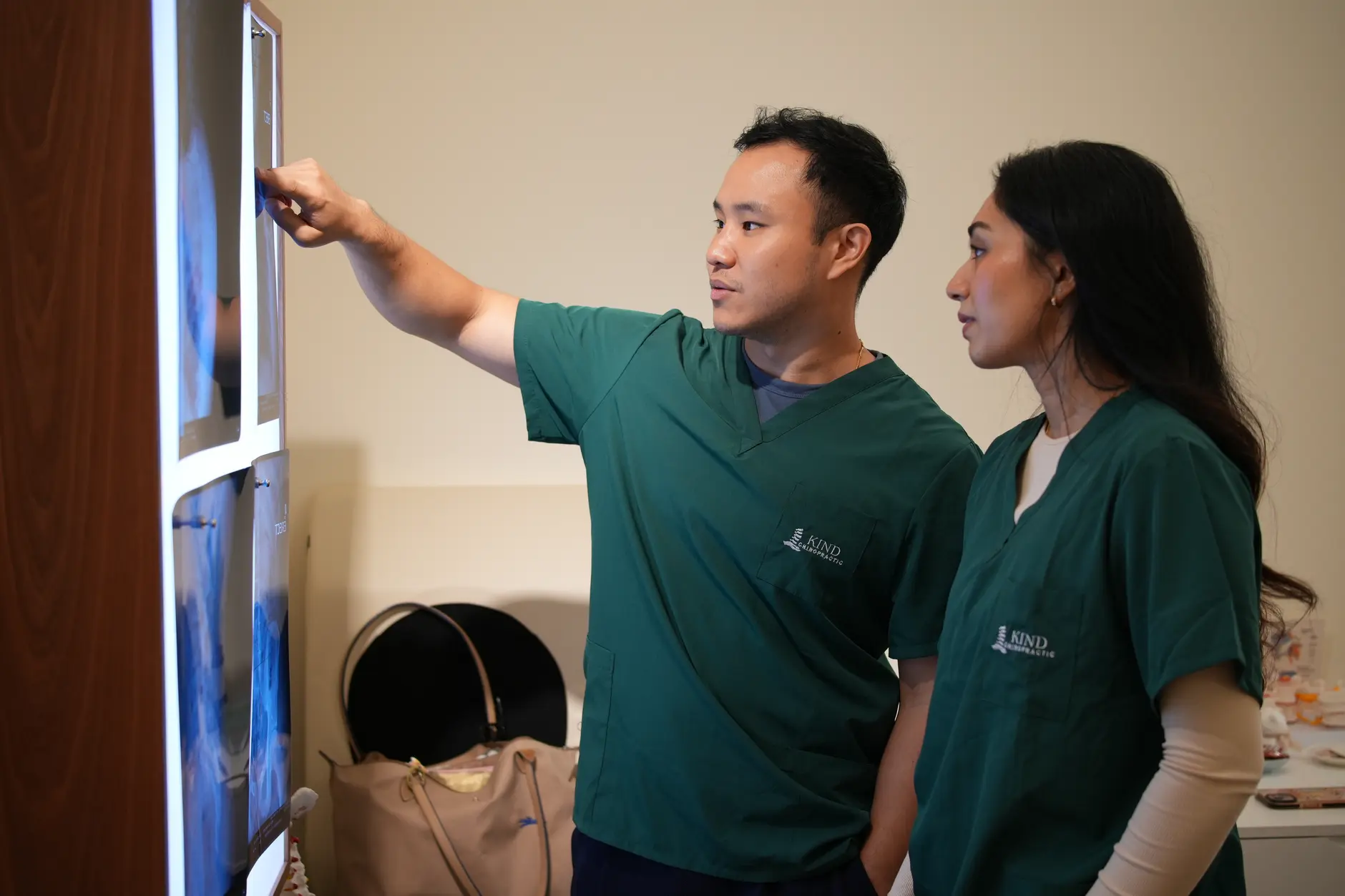
The phrase "slipped disc" lands differently to different people. For some it conjures images of weeks in bed; for others, a surgeon's waiting list. The reality is more encouraging: most people with a herniated or bulging disc recover well without surgery, and many find that conservative, hands-on care is enough to get them back to a normal life. At Kind Chiropractic in Kuala Lumpur, slipped disc cases make up a significant portion of the back and leg pain we assess every week, and the outcomes when we catch them early are genuinely good.
Understanding what is happening inside the spine, and why, is the first step toward making a well-informed decision about treatment. So before anything else, let us look at what a slipped disc actually is and what it does to the surrounding tissue.
What Is a Slipped Disc, and What Happens Inside the Spine
The spine is made up of vertebrae stacked on top of each other, separated by cushioning pads called intervertebral discs. Each disc has a tough outer ring of fibrous cartilage called the annulus fibrosus and a soft gel-like centre called the nucleus pulposus. Together they act as shock absorbers, distributing load evenly across the vertebrae during every movement you make.
A "slipped disc" is a lay term for what clinicians call a herniated, prolapsed, or bulging disc. Nothing actually slips; instead, part of the nucleus pushes through a weakened or torn area in the annulus. Depending on how far the material migrates, the disc can:
- Bulge outward without fully breaching the outer ring (a bulging disc)
- Push through the ring but remain contained within the disc's outer layer (a herniation)
- Extrude material outside the disc space entirely (a disc extrusion or prolapse)
The problem is not always the bulge itself but what it presses on. When protruding disc material contacts a spinal nerve root, it produces inflammation, pain, and the characteristic shooting, burning, or tingling sensation that travels down the leg or arm. In the lower back this pattern is commonly called sciatica; in the neck it produces pain and numbness into the arm and hand.
Not every episode of lower back pain is a disc problem. Muscle strain, stiff spinal joints and posture are far more common causes, which we cover in our guide to back pain causes and when to see a chiropractor.
Numbness in the hand has its own set of possible causes, from the neck down to the wrist. Our guide to hand numbness works through them.
Why Discs Herniate: The Real Risk Factors
Discs do not herniate at random. A combination of long-term mechanical stress and acute loading events weakens the annulus over time until the nucleus finds a way through. The patterns we see most often include:
- Years of sitting with a forward-bent or slumped lumbar spine, which loads the front of the disc repeatedly and weakens the posterior annulus
- Lifting with the back rounded instead of the legs and hips driving the load
- A single forceful twist or bend under load, even something as ordinary as picking up a heavy bag awkwardly
- Occupational exposure: long-haul driving (vibration combined with sustained spinal loading is particularly damaging), manual handling jobs, and prolonged desk work without movement breaks
- Age-related disc dehydration, which makes the nucleus less pliable and the annulus more prone to cracking under stress
- A family history of disc problems, suggesting a connective tissue component to disc health
Knowing the mechanism matters because it points directly toward what corrective care needs to address: not just the compressed nerve, but the postural and movement patterns that created the excessive load in the first place.
Recognising a Slipped Disc: Symptoms to Watch For
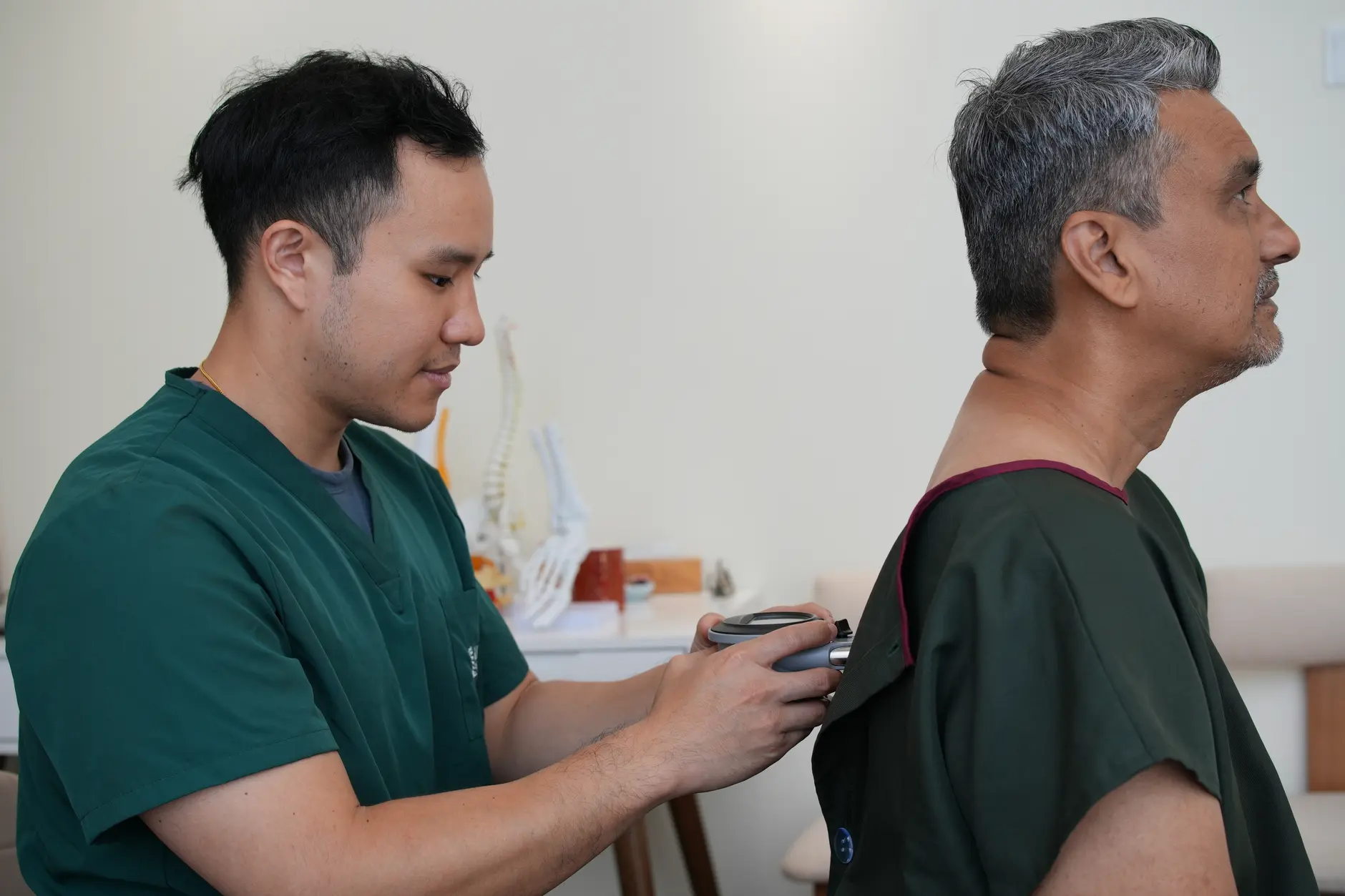
Disc herniations most commonly occur in the lower lumbar spine (L4-L5 and L5-S1 are the most frequent levels) and in the lower cervical spine (C5-C6 and C6-C7). Symptoms vary with location and severity, but the patterns that should prompt assessment include:
- Back pain or neck pain that came on during or after a specific lifting, twisting, or bending incident
- Leg pain (especially below the knee) or arm and hand pain that is more pronounced than the back or neck pain itself
- A sharp, burning, shooting, or electric sensation that travels along a predictable route, such as down the back of the thigh and calf, or along the forearm into certain fingers
- Numbness or tingling in the leg, foot, arm, or hand
- Weakness in a specific muscle group, such as difficulty raising the foot when walking (foot drop) or a weak grip
- Pain that is significantly worse with sitting, forward bending, coughing, or sneezing, and eases slightly when walking or lying flat
This last point is diagnostically useful: discs tend to be more compressed in flexed postures, so pain that rises when sitting and reduces when moving often points toward a discogenic origin.
Red Flags That Require Urgent Medical Attention
While most disc herniations respond well to conservative care, a small subset signal a medical emergency. Do not delay; go to a hospital immediately if you experience any of the following alongside your back or leg pain:
- Loss of control over your bladder or bowels, or a new sensation of numbness in the saddle area (the inner thighs and groin)
- Progressive weakness in both legs, or rapidly worsening weakness in one leg over hours to days
- Bilateral leg symptoms, meaning symptoms on both sides at the same time
These are signs of cauda equina syndrome, a serious compression of the nerve bundle at the base of the spinal cord. It requires surgery, and the outcome depends directly on how quickly decompression is achieved. A responsible chiropractor always screens for these signs and refers immediately if they are present. Your safety is the non-negotiable starting point of every visit here.
How Chiropractic Care Treats a Slipped Disc Without Surgery
The goal of conservative disc care is to reduce nerve compression and inflammation, restore the spine's normal movement and alignment, and then address the postural and mechanical factors that led to the injury. Chiropractic care addresses all three layers.
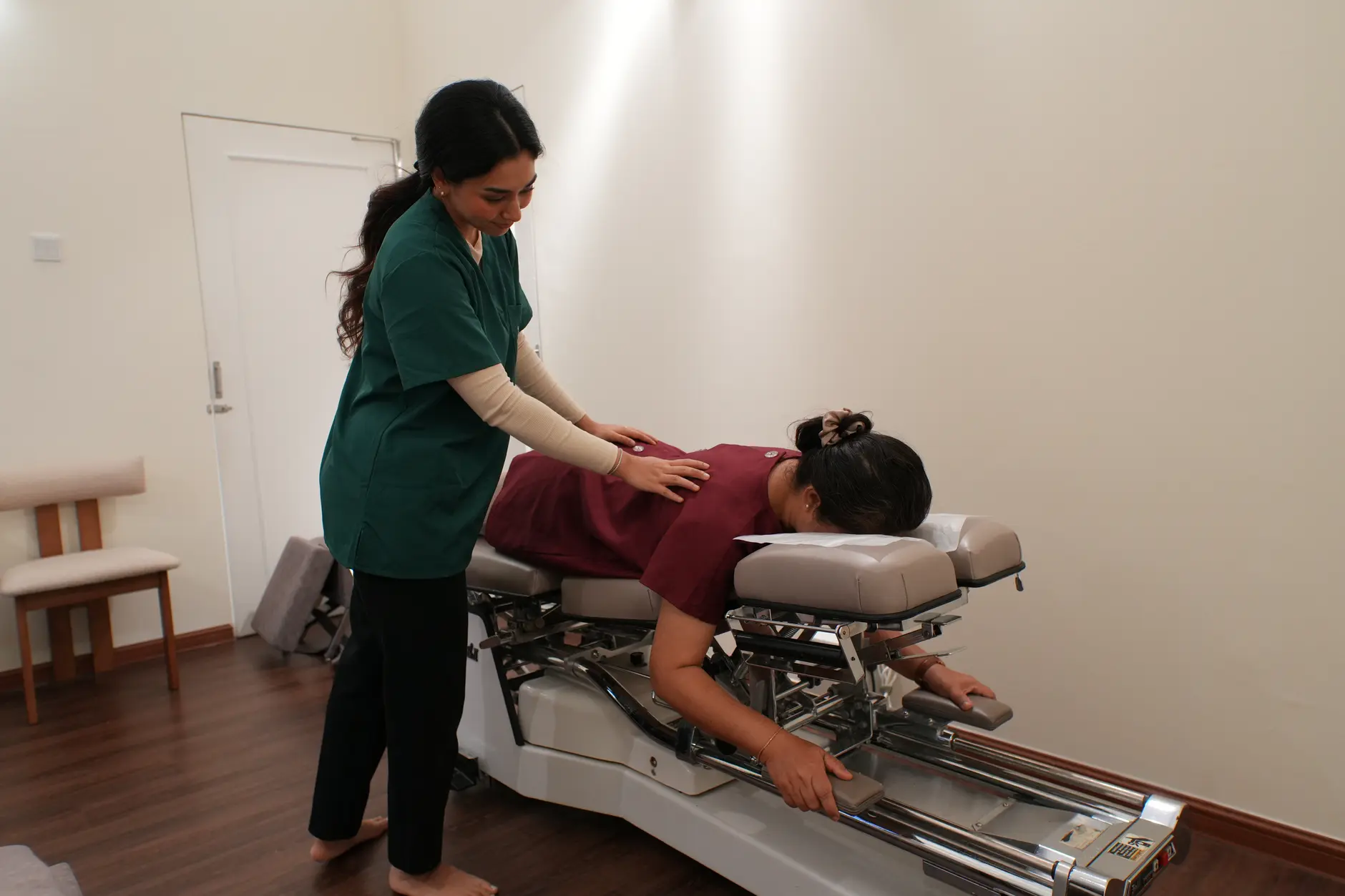
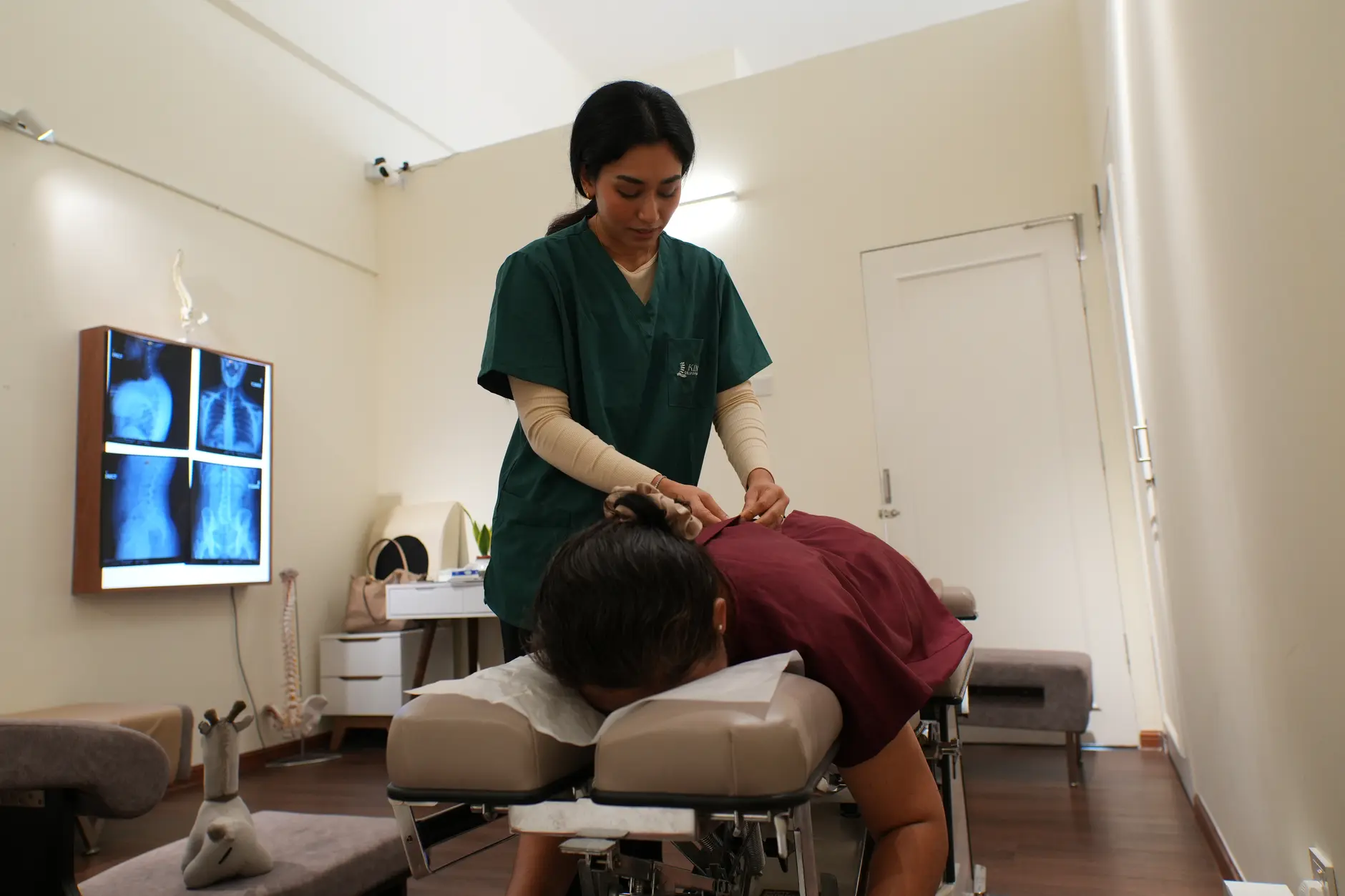
At Kind Chiropractic, we use the Gonstead system for spinal assessment and treatment. The Gonstead method is built around precision: rather than applying general spinal manipulation, we identify the specific disc level and vertebral segment contributing to the nerve compression, confirmed by X-rays when there is a clinical reason, and apply a carefully controlled adjustment only to that level. This matters enormously in disc cases, where indiscriminate manipulation can aggravate an already irritated nerve root.
Spinal alignment care via the Gonstead approach aims to create more space in the affected disc segment, reduce the mechanical load on the herniated portion, and restore proper joint motion to the segments above and below the injury. As the nerve root irritation settles and motion returns, the muscles that have been guarding the area begin to relax, and the cycle of spasm, compression, and pain starts to break.
Depending on the clinical picture, the early phase of care is typically more frequent (several visits per week) and gentle, with techniques chosen for their ability to decompress without provoking symptoms. As your response progresses, care intervals extend and the focus shifts toward rehabilitation: restoring strength, stability, and movement patterns that protect the disc going forward.
What the Research Says About Conservative Disc Treatment
The evidence for conservative management of lumbar disc herniation is solid. Multiple high-quality clinical trials and systematic reviews have found that the majority of patients with confirmed disc herniations, including those with significant leg pain from nerve compression, recover well with non-surgical treatment, including spinal manipulation, exercise, and physiotherapy. Surgery offers faster short-term pain relief in severe cases but produces similar outcomes to conservative care at the one and two year marks in most patient populations. If you are weighing your options for a non-disc problem, our guide to choosing between chiropractic, physiotherapy and massage walks through how the three compare.
That does not mean surgery is never appropriate. It means that for most patients who do not have the red flag signs listed above, a well-designed course of conservative care is the clinically sound and evidence-supported first step, not the consolation prize after surgery is ruled out.
What conservative care cannot achieve is surgical decompression of a large free fragment that is maintaining constant pressure on a nerve root and failing to respond after several weeks of careful treatment. That is a conversation your chiropractor will have honestly with you if your case moves in that direction.
What to Expect at Your First Disc Assessment
Every disc case at our clinic starts with a thorough clinical assessment before any hands-on treatment begins. We take a detailed history of how and when the symptoms started, the precise distribution of your leg or arm pain, what makes it better or worse, and how it affects your daily function. We screen carefully for red flag signs at every visit.
We then assess your posture, spinal range of motion, and nerve tension signs (tests that reproduce or ease the radiating pain pattern). If your examination shows a clinical reason, we may recommend X-ray imaging so we can see the alignment of your spine clearly. We explain every finding in plain language, outline the care plan, give a realistic timeline, and answer every question before we begin.
You will not be pushed into a long open-ended commitment. We review progress at regular intervals and adjust the plan based on how your body is responding. If at any point the clinical picture suggests you would benefit from imaging beyond X-ray, a specialist opinion, or surgical evaluation, we will say so clearly and help you get there quickly.
Daily Habits That Support Disc Recovery
What happens between visits is as important as the visits themselves. A few evidence-supported habits that consistently aid recovery:
- Avoid prolonged sitting. Intradiscal pressure is highest when sitting in a forward-flexed position. Use a lumbar support, take standing or walking breaks every thirty minutes, and avoid sinking into low soft chairs during the acute phase.
- Keep moving, gently. Bed rest beyond one or two days is not helpful and often prolongs recovery. Gentle walking, as pain allows, maintains circulation to the disc and reduces muscle guarding.
- Mind the lift. When you do need to pick something up, bend at the hips and knees, keep the object close to your body, and avoid twisting while loaded. This is not permanent; it is relevant during the healing phase.
- Sleep position. Side-lying with a pillow between the knees, or on your back with a pillow under your knees, offloads the lumbar discs and often reduces morning stiffness.
- Correct your screen height. For cervical disc problems especially, a screen that sits too low keeps the neck in sustained flexion, which increases disc pressure. Raise it to eye level.
We also refer patients with disc problems to appropriate exercise rehabilitation once the acute nerve irritation has settled, targeting the deep stabilising muscles that protect the spine under load.
How Long Does Disc Recovery Take
Recovery timelines vary considerably depending on the severity of the herniation, how long it has been present, and how much nerve inflammation has developed. A general framework:
- Mild to moderate bulge with local back or neck pain only: improvement often begins within two to four weeks of consistent care
- Herniation with radiating leg or arm pain: four to ten weeks is typical before nerve symptoms begin to reduce significantly; full resolution can take three to six months
- Large extrusion or longstanding compression with some nerve damage: recovery is possible but slower, and may involve a period of residual numbness even as pain resolves
The pattern of improvement matters as much as the timeline. If leg pain is decreasing even as back pain temporarily increases, that is often a sign the nerve is decompressing (a phenomenon called centralisation, which is a positive prognostic indicator). If symptoms are worsening or failing to improve after a reasonable trial of conservative care, we will discuss next steps openly with you.
Is Chiropractic Care Safe for a Slipped Disc
Yes, for the vast majority of disc herniations, with proper assessment. The key word is assessment: a Gonstead chiropractor does not apply manipulation to a disc case without first identifying the specific segment involved, ruling out contraindications, and choosing a technique appropriate to the level of irritation. For acute, severely irritated nerve roots, we often begin with very gentle, lower-force techniques and progress as the case allows.
The risk of serious adverse events from chiropractic care for lumbar disc herniation in properly assessed patients is very low according to the available evidence. The much larger risk, for most patients, is untreated progression of the disc problem over months and years.
When to Consider Surgery
Surgery becomes the appropriate next step in a defined set of circumstances:
- Cauda equina syndrome: always a surgical emergency, as described in the red flags section above
- Progressive neurological deficit: rapid worsening weakness that does not respond to conservative care within a few weeks
- Failure of conservative care: a well-executed course of conservative management over eight to twelve weeks with no meaningful improvement in a patient with significant nerve compression
- Patient preference after being fully informed of both options and their evidence base
If you reach a decision point that involves surgery, we can help you prepare that referral and, equally importantly, help you recover well afterward. Post-surgical spinal rehabilitation and the postural correction work that protects the disc from re-injury are areas where chiropractic care adds genuine long-term value.
The Connection Between Disc Health and Posture
Disc herniations rarely happen in isolation. They are usually the end-point of years of cumulative mechanical stress, and that stress is almost always tied to your habitual posture and movement patterns. An anterior pelvic tilt and lumbar hyperlordosis load the posterior disc; a flexed, rounded lumbar spine loads it differently but just as damagingly over time. Forward head posture and loss of cervical lordosis transfer similar loads to the cervical discs.
Part of what makes conservative chiropractic care durable rather than just temporarily palliative is this postural correction component. Alongside the spinal alignment care, we work with patients on the ergonomic and movement habits that change the daily load pattern on the disc. That is the layer that determines whether a person who has recovered from one disc episode goes on to have another five years later, or stays well.
Can a Slipped Disc Heal on Its Own
To a meaningful degree, yes, and this is one of the most underappreciated facts about disc biology. Research using serial MRI scans has shown that herniated disc material, particularly extruded fragments, can resorb over months as the body's immune system recognises and removes the foreign nucleus material from outside the disc space. Larger herniations sometimes resorb more reliably than smaller ones. This natural resolution process is one of the reasons most patients improve with time and conservative care, even without surgery. Chiropractic management works with this natural process by reducing mechanical stress on the healing disc, improving circulation to the area, and addressing the factors that would otherwise continue to load the disc unfavourably.
Taking the Next Step
If you have been managing leg pain, back pain, arm pain, or numbness that sounds like a disc problem, the most useful thing you can do is get a proper clinical assessment. Self-diagnosing from symptoms alone or waiting to see whether things settle over months without understanding what is happening is a plan with real risks: the nerve compression and the postural problems driving it do not resolve on their own without address.
Our team at Kind Chiropractic has assessed and managed many patients with confirmed disc herniations across every severity level. We are honest about what conservative care can achieve, direct about when a case needs a different path, and focused on helping you make an informed decision about your spine. If you are ready for that conversation, book an appointment or check our pricing page for details on the initial assessment.
A disc problem is not a life sentence. Most people come through it and return to full activity. The right care at the right time makes that journey considerably shorter.
Suffering from back pain? Our Gonstead specialists can help.
No referral needed. We confirm your appointment within 2 hours.