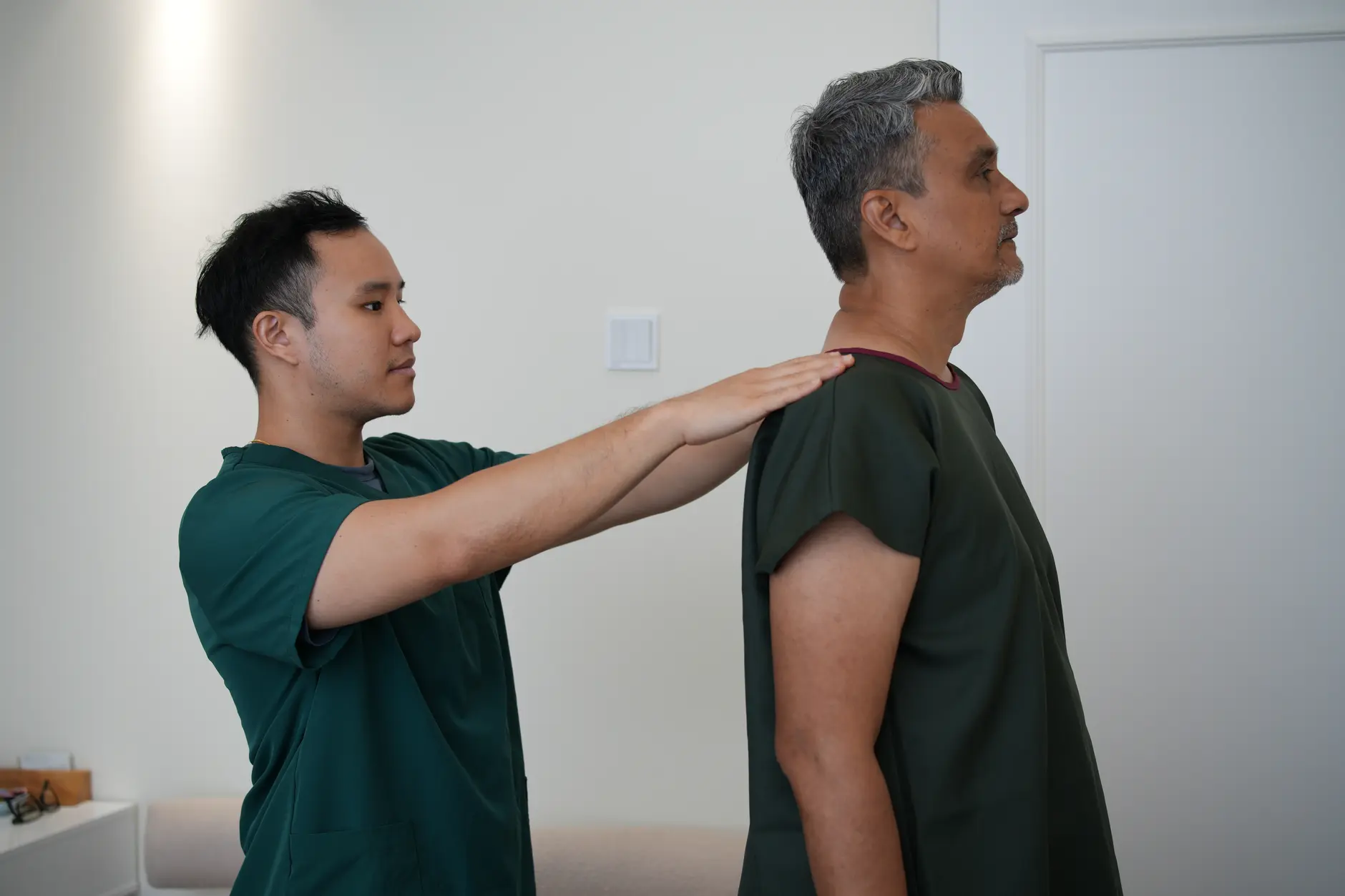
Shoulder pain has a way of interrupting almost everything. Reaching overhead, putting on a shirt, sleeping on your side, driving to work: every ordinary movement becomes a reminder that something is wrong. At Kind Chiropractic in Kuala Lumpur, shoulder complaints are among the most common presentations we assess, and the range is wide. Some patients arrive after a single incident; others have been managing a stiff, aching shoulder for months or even years without fully understanding what is driving it.
The shoulder is the most mobile joint in the body, and that mobility comes at the cost of inherent stability. Four muscles and their tendons, collectively called the rotator cuff, are the primary stabilisers. Add in the glenohumeral joint, the acromioclavicular joint, the surrounding bursa, and the cervical nerve roots that supply the entire shoulder girdle, and you have a structure where the source of pain is rarely as straightforward as it first appears. Getting that source right determines whether treatment actually resolves the problem or merely manages it.
What Is Actually Causing Your Shoulder Pain
Before mapping out treatment, it helps to understand the most common shoulder pain generators and how they tend to present. These categories frequently overlap, but each has distinct features.
Frozen shoulder (adhesive capsulitis) is characterised by a progressive loss of shoulder movement in all directions, not just one. Pain is typically diffuse and aching, worse at night, and the restriction builds gradually over weeks to months. It is more common in people with diabetes, thyroid disorders, and those who have immobilised the shoulder after an earlier injury.
Rotator cuff injuries range from minor tendon irritation to partial or full-thickness tears. Pain is usually felt on the outer arm, particularly when lifting the arm to the side or reaching overhead. Night pain when lying on the affected shoulder is a very common complaint. The supraspinatus tendon is by far the most commonly involved.
Shoulder impingement occurs when tendons or the bursa are mechanically compressed between the humeral head and the acromion during arm elevation. It produces a characteristic pain arc, usually somewhere between sixty and one hundred and twenty degrees of arm lift, and aching at rest after activity.
Acromioclavicular (AC) joint dysfunction often follows a fall onto the shoulder or prolonged overhead work. Pain sits at the top of the shoulder, is point-tender over the AC joint, and is reproduced by crossing the arm across the chest.
Referred shoulder pain from the cervical spine is frequently misidentified as a shoulder problem when the underlying driver is actually in the neck. Nerve root compression at C5 or C6 produces pain and sometimes weakness that is felt entirely in the shoulder and upper arm. Without examining the cervical spine, this cause can be missed entirely.

Red Flags: Shoulder Pain That Requires Immediate Medical Attention
Most shoulder pain is musculoskeletal and appropriate for conservative assessment. However, certain patterns are serious warning signs that require urgent medical evaluation, not chiropractic assessment. Go to an emergency department or call emergency services immediately if your shoulder pain is accompanied by any of the following:
- Chest pain, pressure, or tightness, especially radiating to the jaw or left arm. Referred cardiac pain commonly presents as left shoulder or arm pain, and this pattern must be ruled out before any other cause is considered.
- Shortness of breath, sweating, nausea, or a feeling of impending doom alongside the shoulder pain.
- Shoulder pain following significant trauma such as a fall from height, road accident, or forceful impact, particularly if there is visible deformity, inability to move the arm at all, or signs of vascular compromise (pale, cold, or pulseless limb).
- Signs of infection: shoulder swelling that is hot to the touch, redness, fever, and a general feeling of being unwell. Septic arthritis of the shoulder is rare but serious and requires urgent medical management.
- Rapidly progressive weakness of the entire arm without obvious cause, or sudden loss of hand function. This can indicate a cervical myelopathy or vascular event that is outside the scope of chiropractic care.
A responsible clinician always screens for these red flags before proceeding. At Kind Chiropractic, this screening is built into every initial assessment, and if anything in your history or examination raises concern, we refer you promptly.
How We Assess Shoulder Pain at Kind Chiropractic
Accurate diagnosis of shoulder pain requires looking beyond the shoulder itself. Our assessments at Kind Chiropractic begin with a thorough case history: when the pain started, whether there was a precipitating event, the precise location and quality of the pain, what makes it better or worse, whether there is any arm weakness or hand numbness, and how it is affecting sleep and daily function.
We then examine the cervical spine and thoracic spine as well as the shoulder joint itself, because the pattern of restriction, tenderness, and pain provocation tells us whether we are dealing with a local shoulder problem, a referred cervical problem, or a combination of both, which is common.
Range of motion testing, muscle strength testing for each rotator cuff component, and specific orthopaedic tests for impingement, cuff integrity, and AC joint involvement all form part of the assessment. For most shoulder cases involving possible bony structural changes, a history of trauma, or longstanding restriction, we recommend X-ray imaging. For cases where soft tissue pathology needs to be visualised more clearly, we may refer for ultrasound or MRI.
We explain every finding before any hands-on treatment begins.
Frozen Shoulder: Why It Takes Time and What Actually Helps
Frozen shoulder is one of the most frustrating shoulder conditions to live with because it tends to develop slowly, last for months to years, and is often poorly explained to the patient. Understanding the three-phase progression makes the treatment approach clearer.
The freezing phase involves increasing pain and stiffening, often lasting two to nine months. The frozen phase is characterised by less acute pain but severely restricted movement; this can last four to twelve months. The thawing phase involves gradual spontaneous return of movement, which can take anywhere from five months to several years.
The condition does resolve in most people, but doing nothing often means a longer, more painful course. Evidence supports gentle manual therapy, including joint mobilisation, to improve movement during the thawing phase, combined with progressive stretching within pain tolerance. Forceful manipulation during the acute freezing phase is contraindicated and will worsen the condition.
At Kind Chiropractic, we also assess the cervical spine and thoracic spine in frozen shoulder cases because stiffness and restriction at those levels can perpetuate the shoulder problem and slow recovery. The shoulder does not work in isolation.
Rotator Cuff Pain: Conservative Care First
Rotator cuff tendinopathy and partial thickness tears are extremely common and respond well to a structured conservative approach when the underlying mechanical drivers are addressed alongside the symptomatic treatment.
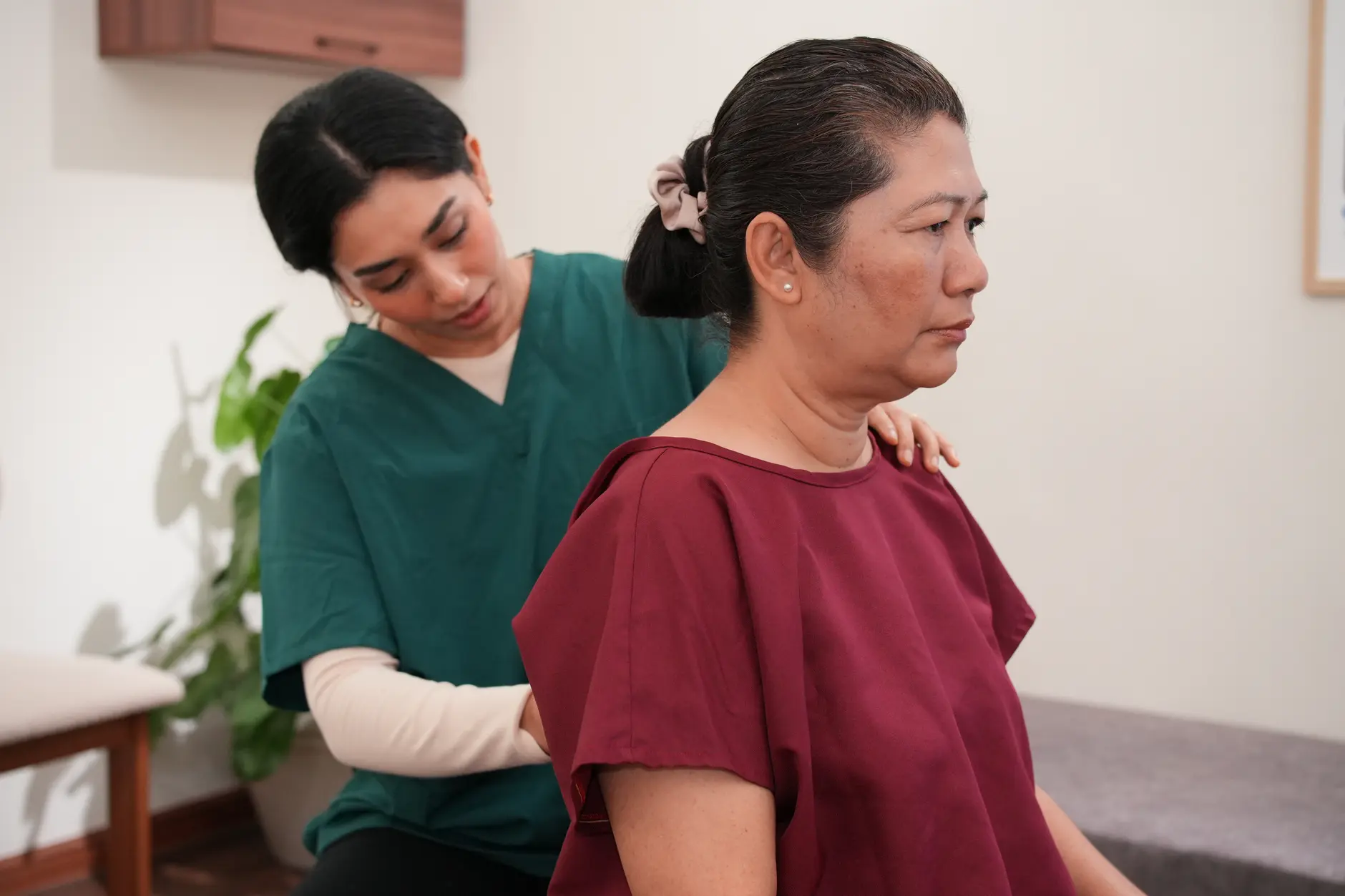
The rotator cuff does not become painful in isolation. Poor scapular mechanics (where the shoulder blade is not moving correctly under the arm as it rises) load the rotator cuff tendons abnormally, creating the microtrauma and inflammation that drives the pain. Thoracic stiffness, cervical restriction, and weakness of the lower and middle trapezius and serratus anterior all alter scapular rhythm in ways that overload the cuff.
Chiropractic care for rotator cuff presentations at our clinic targets the thoracic and cervical levels contributing to the mechanical overload, restores shoulder joint mobility where it is restricted, and works alongside rehabilitative exercise targeting the specific muscle groups that support correct scapular position under load.
Significant full-thickness cuff tears producing marked weakness may require surgical intervention. We assess this honestly and refer when the clinical picture warrants it.
Shoulder Impingement: Breaking the Compression Cycle
Impingement is not just a structural problem; it is a functional one. The subacromial space narrows when the rotator cuff is weak, the scapula is positioned poorly, or the thoracic spine is stiff and rounded, all of which alter the mechanics of arm elevation. Treating only the inflamed bursa or tendon without addressing these upstream contributors means the impingement will recur.
Conservative management of shoulder impingement through chiropractic care focuses on restoring thoracic mobility (a stiff mid-back forces the shoulder blade to compensate), improving cervical alignment where nerve supply to the shoulder muscles is compromised, and correcting the muscle imbalances that allow the humeral head to ride too high in the socket during movement.
We pair this with pain relief therapy approaches to manage the inflammatory load while the structural corrections take effect, allowing patients to do the rehabilitative exercises that reinforce the gains.
The Shoulder-Neck Connection: When Is It Really the Cervical Spine
Shoulder and neck pain very often co-exist, but the clinical picture matters enormously for deciding what to treat. Referred pain from the C5 and C6 nerve roots produces pain that feels located in the deltoid muscle and upper arm; it is commonly reported as "deep in the shoulder" and may accompany arm weakness or hand changes.
We see patients regularly who have been managing "shoulder pain" for months and received treatment only to the shoulder, when the dominant driver is actually a cervical disc or facet restriction generating referred pain into the shoulder girdle. Treating the shoulder alone in this scenario is a plan that produces partial and temporary relief at best.
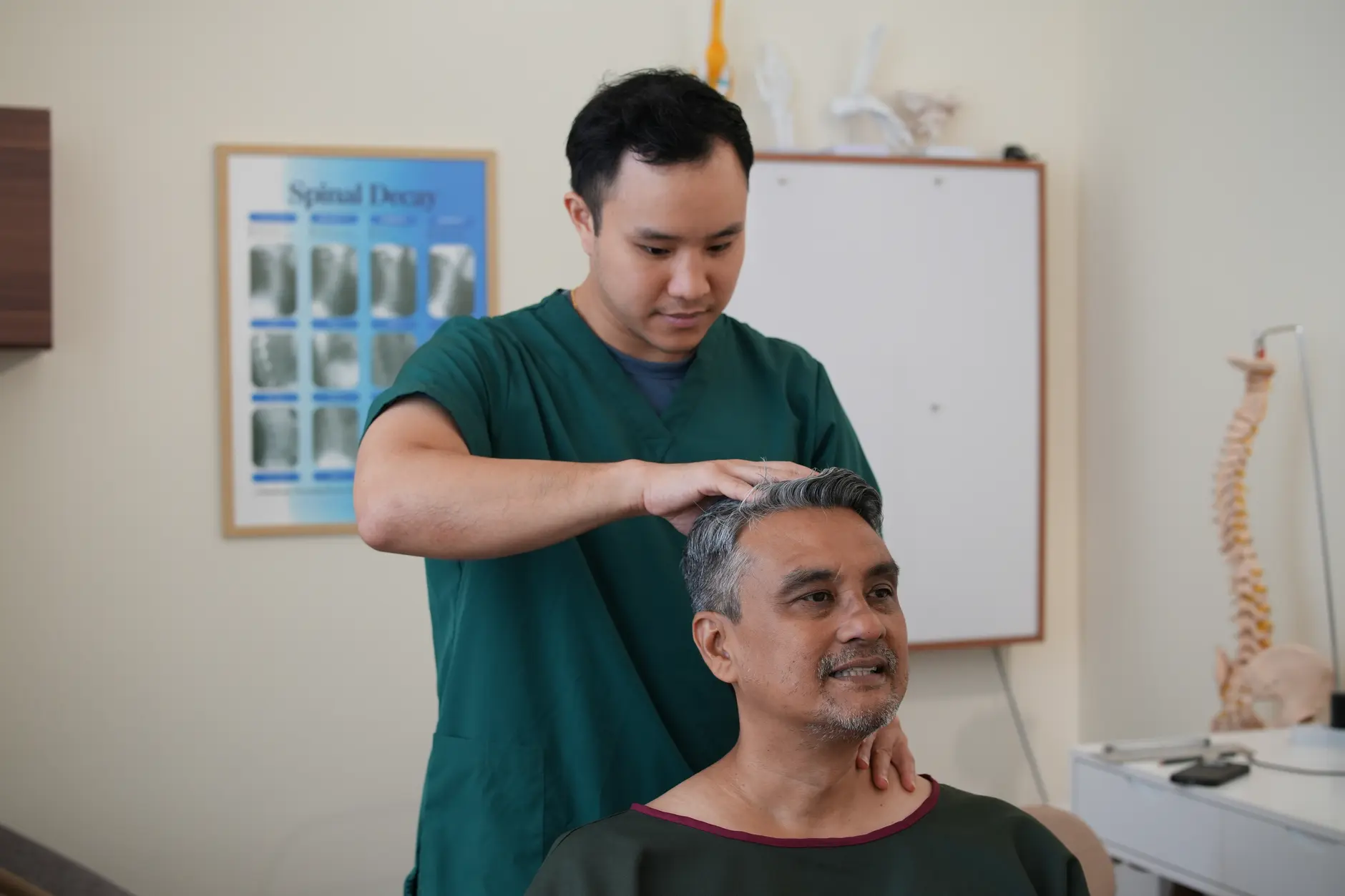
If the cervical spine is contributing to your shoulder pain, the relevant care extends to the neck (see our neck pain treatment in Bangsar), and we cover the overlap carefully. For a deeper look at cervical causes of shoulder and neck symptoms, read our article on neck pain causes and how chiropractic helps. In this article we are focusing on shoulder-primary causes: frozen shoulder, rotator cuff pathology, impingement, and AC joint problems, where the shoulder itself is the main driver.
What the Evidence Says About Chiropractic Care for Shoulder Pain
The research base for manual therapy in shoulder pain has grown considerably in the last decade. Systematic reviews of conservative care for rotator cuff tendinopathy, impingement syndrome, and frozen shoulder consistently show that manual therapy (including joint mobilisation and manipulation of the shoulder, thoracic spine, and cervical spine) combined with exercise produces meaningful pain reduction and functional improvement in most patients.
For thoracic spine manipulation specifically, multiple clinical trials have shown significant immediate improvements in shoulder pain and range of motion, even in patients whose primary complaint was the shoulder rather than the back. The thoracic spine is mechanically upstream of the shoulder, and its stiffness contributes to shoulder dysfunction in ways that are well-supported by biomechanical research.
As with all musculoskeletal conditions, chiropractic care works within what the tissue can achieve. A full-thickness rotator cuff tear, significant glenohumeral osteoarthritis, or a bony structural abnormality at the shoulder may ultimately require specialist intervention. We are transparent about the limits of conservative care and refer appropriately.
What to Expect From Shoulder Pain Treatment at Our KL Clinic
For most shoulder presentations, the early phase of care focuses on reducing pain and inflammation while beginning to restore the range of motion and joint mechanics that have been lost. For acute or irritated presentations, the initial visits are more frequent, often two to three times per week, with gentle techniques appropriate to the irritability level.
As the acute phase settles, care intervals extend and the work becomes more rehabilitative: targeting the specific muscle groups that support the shoulder, re-establishing correct movement patterns, and reducing the cervical and thoracic restrictions that were feeding into the shoulder problem.
Progress is reassessed at defined intervals. We give you honest timelines rather than open-ended treatment plans, and if the clinical picture at any reassessment point suggests you would benefit from a different approach, a specialist opinion, or further imaging, we will say so clearly.
You can find details on what to expect at the initial visit and the cost structure on our pricing page. When you are ready to take the first step, book an appointment and we will work from there.
Daily Habits That Support Shoulder Recovery
Between visits, how you use and rest the shoulder determines how quickly it responds to care. A few evidence-supported habits that consistently aid shoulder recovery:
- Sleep position. For most shoulder conditions, sleeping on the unaffected side with a pillow supporting the painful arm, or on your back with a folded towel under the painful shoulder, significantly reduces night pain.
- Avoid overhead reaching in the acute phase. The impingement zone (between about sixty and one hundred and twenty degrees of arm elevation) loads the already-irritated subacromial structures. You do not need to be completely inactive, but unnecessary overhead reaching slows the settling of inflammation.
- Posture at your desk. Forward head posture and rounded shoulders chronically load the cervical nerve roots, tighten the pectoral muscles, and pull the shoulder blade into a position that worsens impingement mechanics. A screen at eye level, elbows at roughly ninety degrees, and a conscious effort to draw the shoulder blades gently back and down make a measurable difference.
- Keep the arm moving within comfortable range. Prolonged immobilisation, especially in frozen shoulder, accelerates capsular tightening. Light pendulum exercises and gentle range-of-motion movements within a pain-free range are generally encouraged from early in the recovery process.
- Ice or heat. In the acute inflammatory phase (first forty-eight to seventy-two hours), ice applied for fifteen minutes every two to three hours can help contain the inflammatory response. Heat is generally more useful once the acute phase has passed, to improve tissue extensibility before stretching.
Taking the Next Step
Shoulder pain that has been present for more than a few weeks, is waking you at night, is limiting your ability to work or exercise, or has not responded to rest and self-management deserves a proper clinical assessment. Waiting and hoping it resolves without understanding what is driving it is a common approach that often results in months of avoidable disabling pain.
At Kind Chiropractic, we assess shoulder presentations thoroughly, explain every finding in plain language, and build a care plan that is realistic about what conservative treatment can achieve and honest about when a different path is needed. If you are ready to get to the bottom of what is causing your shoulder pain, book an appointment or review our pricing for assessment details.
Most shoulder problems, even those that have been present for a long time, can be meaningfully improved with the right care. The key is understanding what you are actually dealing with.
Ready to experience chiropractic care that works? Book your consultation today.
No referral needed. We confirm your appointment within 2 hours.